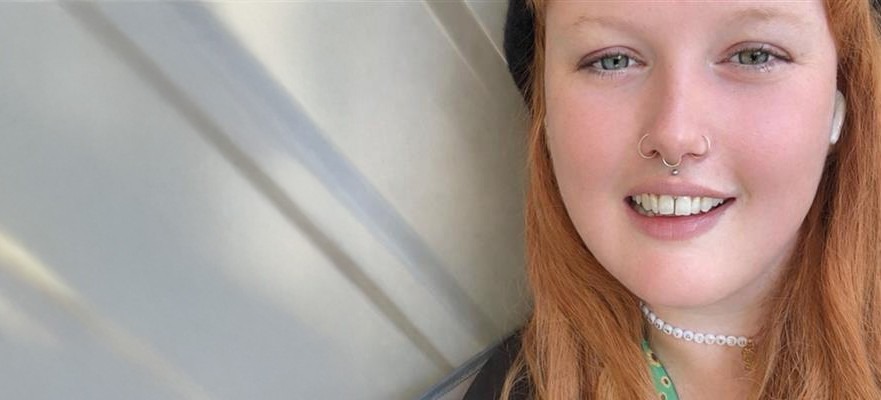
On October the 31st, 2005 I had a stroke three days before my thirteenth birthday. Prior to my stroke, I was like any child about to hit adolescence, going through significant puberty, emotions and trying to establish what it meant for me navigating the world and coming of age, just like my peers.
It was year seven transition day, and I was having a water fight on the school oval at lunch time with my friends, when I suddenly felt an intense pain in the right side of my head, went to tell a teacher, and collapsed into him. I was paralysed within minutes. By the time I reached the hospital I was vomiting, confused, and had dense left-sided hemiplegia. I remembered asking my mum if I could go to the toilet, my parents and the doctors looked at me saddened and said, "You can't walk". I remembered asking my mum if I could go to my guitar lesson that night, I had no concept of what was happening to me. My entire life changed that day, and with that, my identity, and how I navigated the world as a new teen having just had a stroke.
I suffered a right MCA (middle cerebral artery) CVA (cerebrovascular accident) in the basal ganglia section of my brain and was left with a permanent acquired brain injury (ABI). It was found through an MRI, not an initial CT scan as I had braces, and later found the cause was due to a genetic mutation I was born with. The hospital conducted a thrombophilia screening which revealed that it was a compound heterozygote for the MTHFR gene mutation, predisposing to my stroke.
I was an inpatient at the women's and children's hospital here in Adelaide for 3 months, and within that time made considerable progress with an intensive physiotherapy, occupational therapy and speech therapy regime.
How did I feel at the time? Lost, confused, frustrated, and completely disconnected from the child I was prior, I changed. I felt angry, frustrated, and did not understand that I could be laughing and playing on the school oval with my friends one day, and the next trying to learn how to walk and talk again.
On the day of my stroke, my paternal grandmother died at the same time, and due to my stroke I developed something called the pseudo bulbar affect (PBA) and had trouble processing emotions. I didn't have the capacity to process the grief and uncontrollably laughed when delivered the news by my parents a month into my hospital stay. I feel tremendous guilt and shame looking back, yet also recognise my brain was healing, had changed, and how I processed emotions, saw the world and everyone in it looked different.
I went back to school a few days a week and was attending Novita children's services for ongoing physio and occupational therapy. By that time my speech had made significant progress yet I still was struggling with aphasia (trouble communicating) and dysphagia (trouble swallowing). At school, my friends struggled to come to terms with what happened to me, especially after witnessing me almost dying on the school oval, so it felt like a very isolating, painful time attending school. I suffered from significant peer abuse and bullying at this time, and remember feeling different, more mature, and so much more complex than my peers.
Navigating school while in a wheelchair, trying to learn how to walk again, accept that I now live in a disabled body I never asked for, felt isolating enough, then when the bullying started, my mental health declined rapidly and I was struggling to want to attend school at all. It was 2006 by now and I lost myself in the internet as a way to cope with the difficulties and challenges I was facing in my life living with a lifelong disability. Using online resources to make connections were all comforts at this time, and I also began journaling, writing and doing art. I still journal, write and do art today.
Social isolation felt like a big barrier for me, and I felt it was hard to connect with peers who did not understand the degree of pain and frustration I felt. I was put in special ed for a period of time, and felt more connected with the other disabled individuals than I did my friends.
Looking back, I believe I would have benefited from more community engagement, even a support group, although I was a part of Novita children's services, I felt so different from anyone else that I isolated and withdrew even at times of community engagement like Christmas parties they held. I was diagnosed with depression, anxiety, C-PTSD and later in life borderline personality disorder, my stroke and the shifts within my identity being paramount in those diagnoses.
My parents and brothers were gravely affected by my stroke, my mum left work and became my career, and helped me with everything from personal care, feeding and toileting until I learned how to do those things on my own again.
I believe education and parental support, along with counselling could have benefited looking back and seeing how difficult it was for my family navigating their only daughter becoming disabled, and all the grief and change that came with that.
Disability education and early intervention, along with therapeutic interventions for peers and families, would have helped my family and me, yet I understand the stigma, lack of understanding and education around these things back twenty years ago. Today schools implementing such interventions could have a lasting impact on the lives of young stroke survivors and their families, something I never received and was impacted by.
Today I attend Brain injury SA and still work on a physiotherapy program every day from home. I still suffer from partial left-sided hemiplegia, spasticity, dystonia, and seizures related to my stroke. I practice yoga, Pilates, meditation and somatic exercises, and implement holistic medicine (natural medicine). I live independently away from family with my best friend and our cat Gilbert, and benefit tremendously from the NDIS and psychotherapy. I pursue art, writing and journaling still and am part of disability community inclusion groups.
I encourage young stroke survivors to not reach for shame or judgment towards themselves, it is incredibly difficult navigating life after a stroke, and your identity becomes so different than how you were previously. The way you perceive your emotions and others will change, and along with that how other people perceive you. Loving kindness towards yourself in these times, educating others and yourself, and understanding that it is okay that you’re different now, are all values that helped me with understanding my identity after my stroke. Please seek counselling, therapy, and support from services, along with the Stroke Foundation to help you navigate and create a life worth living. Within my own experience that has not been easy, yet so crucial in my self-worth.
Although I will never be the same person I was prior to my stroke, I believe having it was a gift, to see the world through a lens of appreciation that some people do not have. I display such resilience and determination alongside other stroke survivors and have a passion to help people with navigating their own difficult life experiences through natural medicine, which I am currently studying.
Although my identity wavered and changed after my stroke, I forged meaning and feel comfortable within my identification as a disabled person and a stroke survivor, although it has not been easy. My advice to other young stroke survivors and their families is to take it one day at a time and try to educate yourself on what best education and therapeutic modalities work for you and your family.
Taylor Barker