Sport was something that was always present in my life, even though I did find this to be a bit daunting after having had two strokes in July of 2012, at the age of 38, I was a bit lost and lacking confidence in myself and my ability to return to what I once enjoyed. Before my strokes I used to do floor-based yoga. I was unsure on how to approach this again after my strokes. My balance and ability to get up and down from the floor posed challenges to going back to yoga
This was until I was introduced to the reformer bed during post-stroke rehabilitation at Royal Melbourne hospital, and I loved it. Post-stroke, not being able to get on and off the floor as easily, I sought out Pilates, where a reformer bed was used. During Facebook scrolling one day I saw an ad for a Pilates class close to home that used a reformer bed, so I thought I would give it a go.
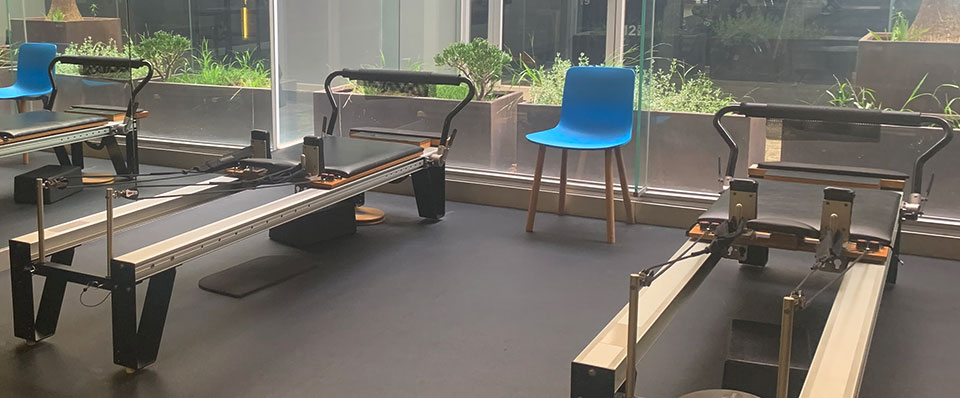
I went on to attend the class but soon realized (as did the instructor) that this Pilates class was too fast-paced for me, and so I was referred to a physiotherapist-led clinical Pilates class under the same roof.
Undertaking a new exercise program (post-stroke) was going to be daunting with thoughts of "Will I be able to do it?" but the physiotherapist was incredibly supportive and encouraging. It is a take-your-time and do-a-quality-exercise-over-quantity approach.
Pilates assists with both stretching and strengthening the weaker left side of my body as it incorporates using both the left and right sides of my body to perform the exercises. I can even balance on the wobble board now and do squats while on it.
Before starting in a class, there were three compulsory assessments conducted by the physiotherapist to enable them to assess my physical limitations and discuss my issues and prepare a tailored program for me. I know these assessments gave me confidence back and allowed me to return to something that I loved as well as bringing many other positive things into my life.
The social aspect, meeting new people, its inclusive, and there are no eligibility requirements. Molly’s involvement (my beautiful10-year-old spoodle) allowed new friendships to form and gave space for coffee catchups after class.
As someone living with a disability, going to a gym can be very confronting and not so welcoming. After attending MHealth for close to 8years, I feel very welcome and comfortable in attending the classes and I am treated the same as everyone else. It is a clinical Pilates class everyone attending the class has some type of issue with their body, and we all attend to either help build strength, stretch, or improve our movement. The physios will change the exercise if there is an issue with my body that has been troubling me and keep an eye on each client during the class to tweak the exercise if needed. It is my exercise family, and we all know each other byname.
Doing Pilates has helped my friends understand that whilst I have my limitations, I can get involved in exercise activities. It has given them a better understanding of what I can do.
The changes to my body after my stroke were daunting, and returning to sport was something I was not sure I would ever be able to do again. But through my Pilates classes, I have found a way to incorporate all the stretching and strengthening exercises that clinical physios recommended for stroke rehab only in a fun, inclusive, and accepting environment.
Post stroke life can become isolating and doing exercises alone at home is not always ideal. But doing them with friends, working toward shared goals, and showing up for each other makes it easier to stay motivated. It brings a sense of joy and connection to maintaining post stroke physical health.
Jules